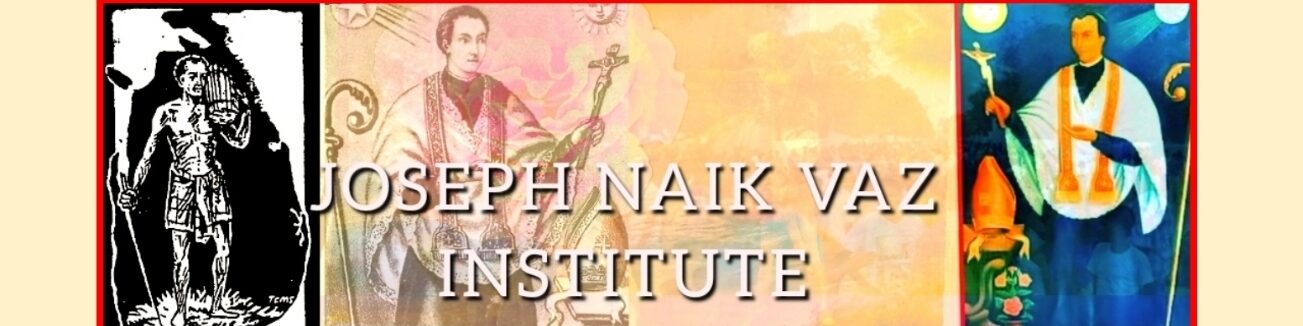
By Filomena Saraswati Giese, 22 January 2026
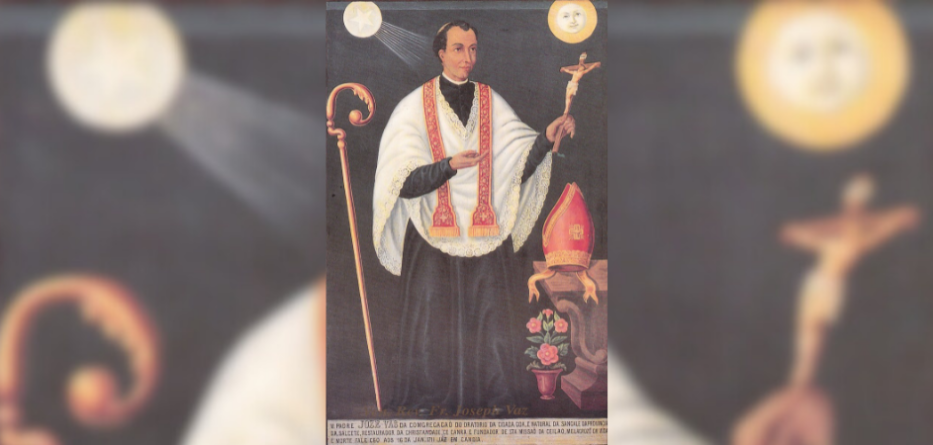
16 January 2026 marks the Feast of St Joseph Vaz (1651–1711), Apostle of Sri Lanka and Kanara (India). On this day, we honour his life and witness – a life of courage and missionary zeal that sustained the Catholic Church amid persecution.
As the Sri Lankan Catholic community in the Diocese of Parramatta and around the world prepares to celebrate his feast, we remember the story of this remarkable Asian priest, who, at great personal risk, brought the Mass and Eucharist to Catholics in both India and Sri Lanka.
Road to sainthood
St Joseph Vaz is the first canonised saint of Sri Lanka and of the Indian states of Goa and Karnataka. His heroic ministry began in the wake of Catholic Portugal’s expulsion from Sri Lanka by the Dutch, who banned the Catholic faith and drove missionaries from the island.
Born in Goa, a Portuguese colony known as the ‘Rome of the East’ for its role in trade and evangelisation, Vaz grew up immersed in a vibrant Catholic community.
Unlike the European missionaries commonly sent to Asia, Vaz was a native-born priest who understood local languages and cultures.
After ordination in 1676, he volunteered to minister to Catholics abandoned under Dutch rule, initially in Kanara, India, where he restored missions, rebuilt churches and nurtured new converts.
A secret ministry
In 1687, Vaz smuggled himself into Sri Lanka under Dutch surveillance, disguised as a labourer, carrying the articles needed to celebrate Mass and a papal brief authorising his ministry.
He settled in the inland Kandyan kingdom, living as a refugee while secretly travelling to minister to Catholics, often at the risk of death.
For over two decades, he re-established the Church, strengthened the faith of persecuted communities, and brought new converts into the fold.
The historical backdrop of his mission was complex. Portuguese explorers first arrived in Sri Lanka in the early 16th century, establishing trade and missionary outposts in coastal regions. They were followed by European religious orders, including Franciscans, Jesuits, Dominicans, and Augustinians; who sought to spread Catholicism under Portuguese patronage.
After the Dutch took control in the mid-17th century, they banned Catholic worship and compelled Catholics to attend Dutch Reformed churches.
In this context, Vaz’s ministry was both daring and indispensable, preserving the faith of countless Catholics in secrecy and hardship.
Through his courage, resourcefulness, and deep faith, St Joseph Vaz exemplifies the power of missionary zeal grounded in love and service. His life reminds us today of the importance of steadfastness and pastoral care in times of adversity.
Life of St Joseph Vaz
See a brief timeline of events below:
1651 – Birth: April 21, Benaulim, Goa, India, in the Naik Catholic family.
1676 – Ordained priest: Volunteers to minister to persecuted Catholics in Ceylon (Sri Lanka).
1681 – Kanara mission: Sent to Mangalore, India, where Dutch authorities had banned priests and destroyed churches.
1685 – Founder: Establishes the first native Catholic congregation in Asia, the Oratory of St Philip Neri, in Goa.
1687 – Mission in Sri Lanka: Smuggles himself into the island disguised as a labourer to minister to abandoned Catholics.
1690–1694 – Refugee and miracle: Arrested by the Dutch in Jaffna; later, prays during a drought in Kandy, bringing rain and winning the Buddhist King’s protection.
1695 – Underground ministry: Travels barefoot across Dutch territory, founding chapels, schools, and free clinics for persecuted Catholics.
1696 – Smallpox ministry: With his nephew, Fr Joseph Carvalho, nurses smallpox victims and establishes Kandy’s first hospital.
1705 – Religious freedom: Organises a petition to the Dutch authorities for freedom of religion.
1711 – Death: 16 January, in Kandy; his cause for canonisation begins in 1713. Later beatified (1995) and canonised (2015).
About the Contributor
Filomena Saraswati Giese.
Filomena Saraswati Giese is a theologian and scholar with a Master’s in Theology from the Jesuit School of Theology, Berkeley, and a doctorate in Multicultural Education from the University of San Francisco. She is the founder and president of the Joseph Naik Vaz Institute (est. 1980) and has published widely on St Joseph (Naik) Vaz in international Catholic journals and newspapers.